%20(1).avif)
Beyond the Scroll. Into the Room.
AR filters, WebAR experiences and product visualisation — built for brands ready to give their audience something to interact with rather than swipe past. Commercially directed. Technically delivered.
of consumers say AR helps them feel more confident in a purchasing decision
higher conversion rate for products with interactive AR vs static imagery
AR active users globally by 2026
Sources: Shopify, Deloitte, Statista. Figures for context — actual results vary by brief and execution.
Your Audience Is Already Holding the Camera.
Every smartphone is an AR device. Every person who opens Instagram, Snapchat or a browser has access to augmented reality without downloading a single thing. The technology isn't the barrier - it never was.
The barrier is brands not knowing what to build, or building something that looks impressive in a pitch deck and gets used once. Bentley Studios Manchester approaches every AR brief the same way we approach every production brief: what is this supposed to achieve, who is it for, and what does success actually look like?
AR built around a commercial objective performs. AR built around a technology demonstration doesn't. We know which one you need.
Three Types of AR. One Commercial Standard.
Every AR project is different. The question we ask first is always the same: what do you need people to do after they've experienced it?
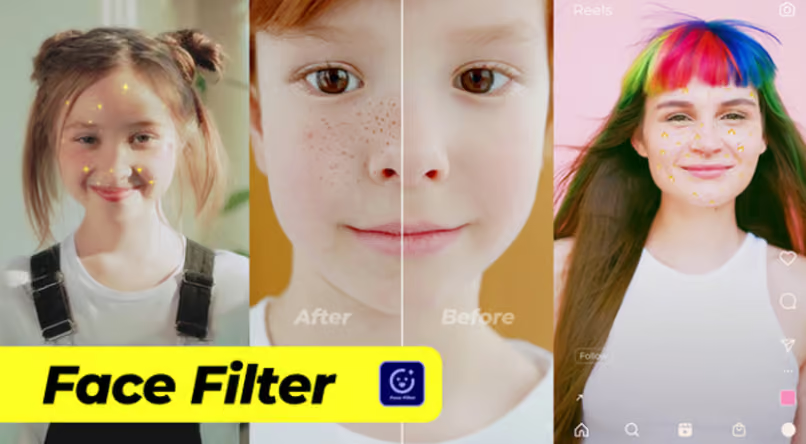
Branded filters for Instagram, Snapchat and TikTok. The kind that people actually use, share and send to their friends — because they're built around a reason to engage, not just a logo slapped on a lens.
Game mechanics, face effects, environment overlays, try-on experiences, branded frames. Built for the platforms your audience is already on, distributed through channels that already have the reach.
Best suited for:
- Brand awareness and social campaigns
- Product launches and seasonal activations
- Event-specific filters and experiential marketing
- Consumer brands with active social audiences
- Influencer and UGC campaign amplification
Platforms:
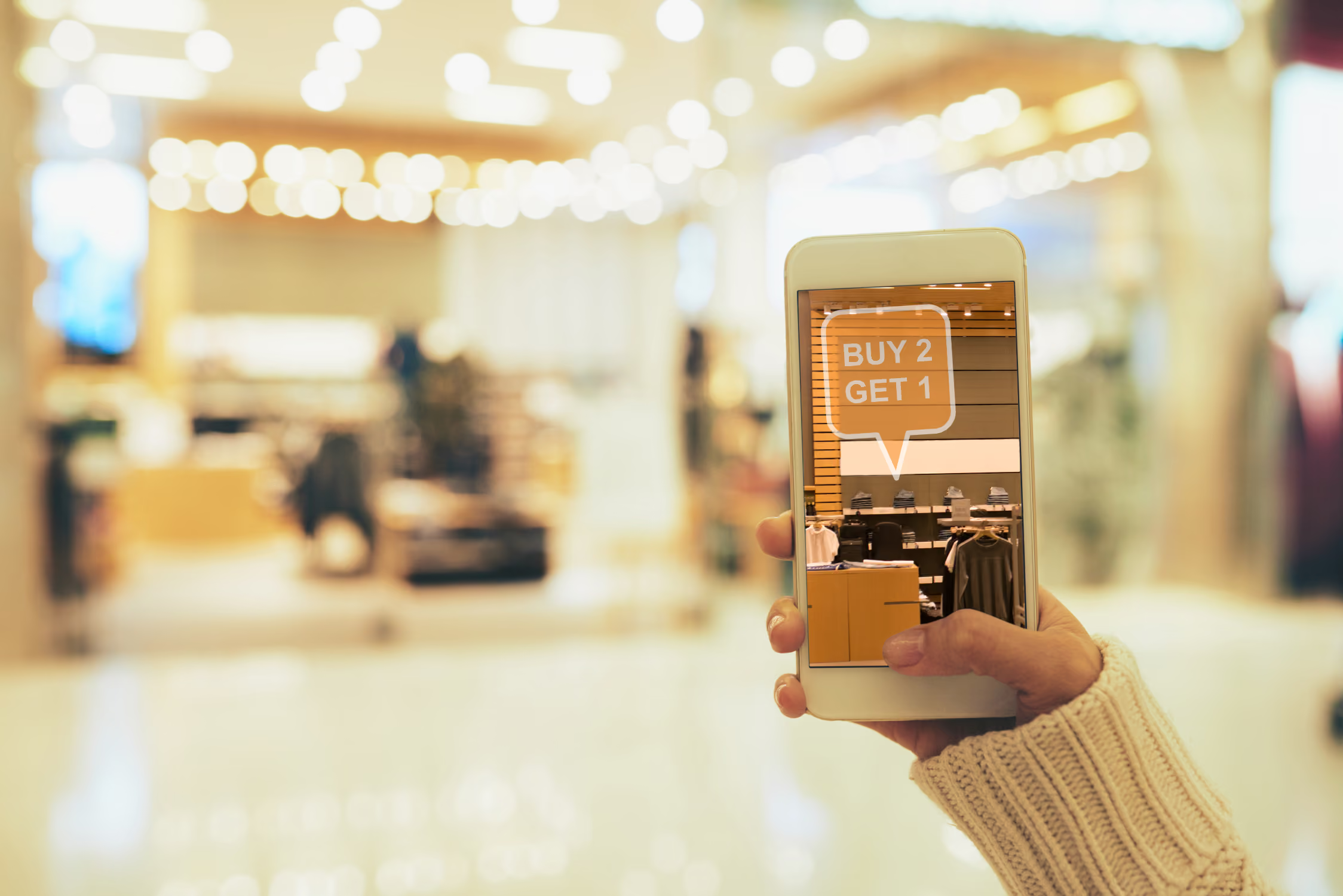
Augmented reality that lives in a browser. No app download, no barrier, no drop-off. Scan a QR code, tap a link, point a camera — and the experience appears in the real world.
Product visualisation, spatial brand activations, packaging triggers, out-of-home extensions and interactive print. WebAR works wherever your audience is — on a street, in a store, on a piece of direct mail — without asking them to do anything more than open their camera.
Best suited for:
- Retail and e-commerce product trials
- Packaging and print that comes to life
- Out-of-home and experiential campaign extensions
- B2B product demonstrations and presentations
- Trade shows and events without dedicated apps
Platforms:
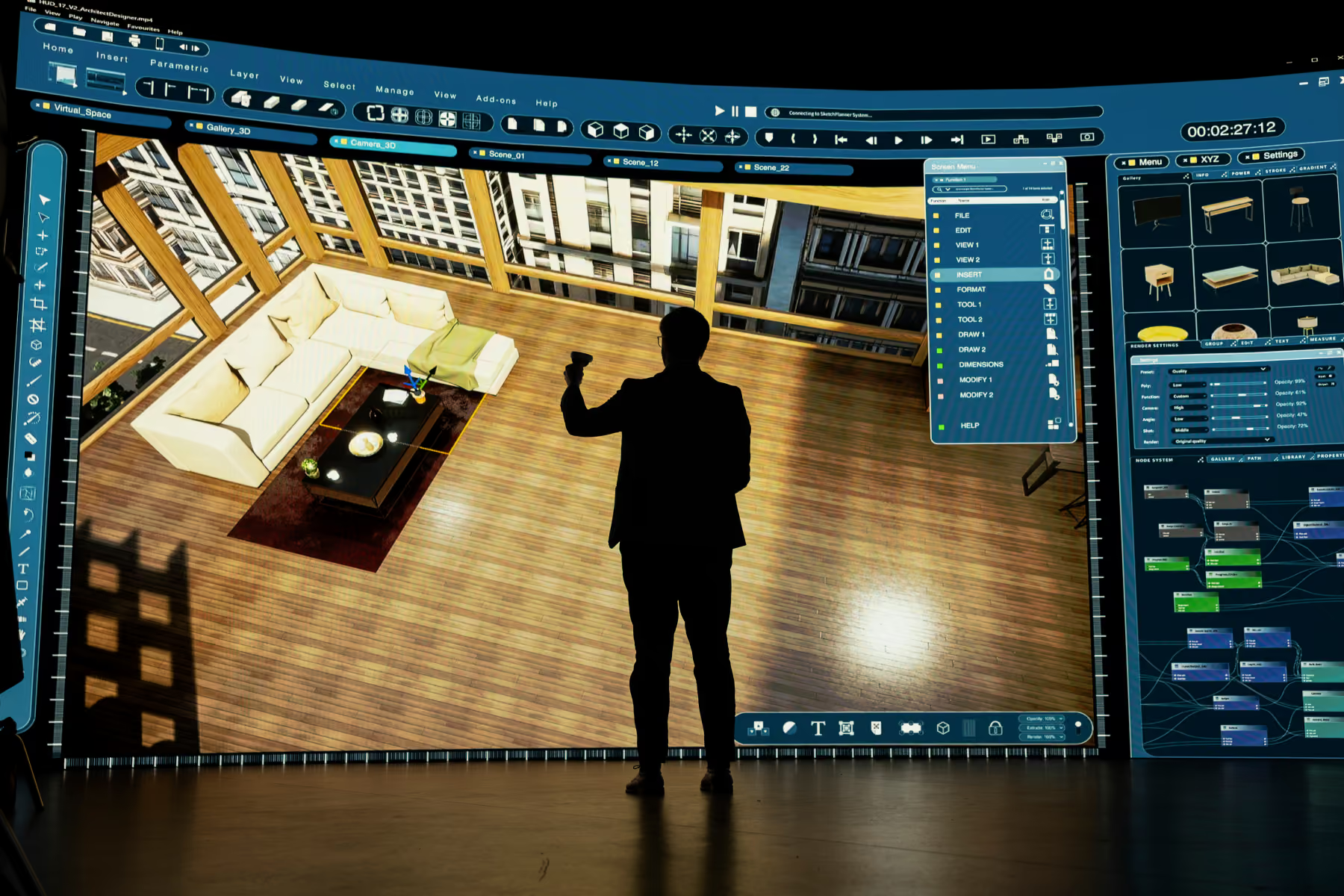
Let your customer put your product in their space before they buy it. AR product visualisation reduces purchase hesitation, cuts returns and increases conversion — because seeing something at actual size, in your actual room, is more convincing than any product description ever written.
Furniture, interiors, fashion, automotive, consumer electronics — any product with physical dimensions benefits from the ability to be visualised before purchase.
Best suited for:
- E-commerce brands with high return rates
- Furniture, interiors and home goods retailers
- Fashion and accessories try-on experiences
- Automotive and consumer electronics
- B2B equipment and industrial product demonstrations
Platforms:
Directed by Bentley Studios. Built by Specialists.
AR development is a specialist discipline. The same way a film director doesn't operate the camera, grade the footage and compose the score simultaneously — a good AR production separates creative direction from technical execution.
Bentley Studios leads the brief, the creative concept, the user experience design and the commercial objective. Specialist AR developers - vetted, regularly worked with, and briefed precisely - handle the technical build.
The result is augmented reality that is commercially considered and technically sound. Not a compromise between the two.
Discovery
Brief, objectives, audience and platform. The commercial questions before the technical ones.
Concept & UX Design
Experience design, user flow and creative direction. What the user does, sees and feels — agreed before a line of code is written.
Development
Specialist AR developers build to the agreed spec. Platform-specific build for Meta Spark, Snap Lens Studio or WebAR frameworks as required.
Testing
Device testing across iOS and Android, platform submission and approval where required. Nothing ships until it works on the devices your audience actually uses.
Launch & Distribution
Filter publication, QR code generation, embed code or app store submission depending on the delivery method. Distribution strategy agreed at brief stage.
In Their Words


.avif)
Professional and high-quality work. Will be using Bentley Studios again.

Tom Gunnell
Working with Bentley Studios was an easy, quick, efficient and effective process. I had asked Bentley Studios to help with photographing some tombs for an upcoming book I am writing. Using the expertise they possess, they were able to bring exactly the kind of photos I was looking for. Throughout the process I was regularly consulted to ensure that it fit the remit. I would recommend them to anyone who needs any work doing with a camera.
Lewis Turner
Very professional and extremely happy with the work we did. Thanks again.
Ben Jansen
First rate photographer....very creative...easy to get along with and great finished product. Would totally recommend and will 100% be using again.....oh and extremely reasonably priced
Darren Robinson
Ian did a lovely job photographing our Manchester flats for serviced accommodation. Nothing was too much trouble, very professional and prompt.
Andy Glynne
…nothing short of amazing; he was extremely thorough, professional and clearly had top-notch knowledge in both the video and audio side of things … made the filming process extremely smooth and fluid and … Will definitely be continuing to use his services regularly!
Ollie Smith
Things People Usually Ask.
Q1: Do my customers need to download an app to use AR?

Q2: How much does AR production cost?
Q3: How long does an AR project take to deliver?
Q4: What platforms do you build AR for?
Q5: Can I see examples of AR work before committing to a brief?
Q6: How is AR different from virtual reality?
Curious About What AR Could Do for Your Brand?
.svg)



.png)